

Learn how custom web design systems create unique brand experiences, improve consistency, and prevent AI-driven website sameness.
AI has revolutionized the nature of websites development in business. The latest AI-based web design systems are capable of creating designs, content recommendations, and other visuals within minutes, which is why developing a web site is faster and cheaper than ever. Although this is a good speed, it has brought about a new challenge. A lot of web sites created with the help of AI use the same templates, patterns of design and elements of user interface, which makes the brands in various industries look more and more similar. Consequently, companies will risk losing their uniqueness and becoming one of the generic sites that vie to capture the attention.
A catchy online presence in the contemporary competitive digital environment, needs more than automation. Custom Web Design Systems support business to build a steady visual identity, provide an outstanding user experience on website and provide scalable digital experiences that can be adapted as business expands. Rather than relying directly on AI-generated templates, organizations investing in strategic design systems integrate technology with human creativity to reinforce their brand identity design, enhance their SEO performance, as well as establish customer trust over the long-term.
What Is AI-Driven Brand Sameness?
The swift use of AI-based web design solutions has rendered the process of building websites more open, yet, it has also brought about an increasing issue of AI-based brand sameness. These sites usually create Web pages with a set of ready-to-use templates, popular formatting and popular design references. Even the resulting websites are often similar to thousands of others on the internet although useful.
When automated designs are used solely in businesses, they miss the chance to express their individuality. The use of similar typography, same call-to-action buttons, predictable navigation menus and repetition of imagery decreases brand memorability. Tourists will not be able to tell the difference between one company and another, undermining trust and decreasing the interaction.
A web site must reflect on the values, experience and customer experience of a company, not just a set of algorithmically determined design rules. Companies that wish to be unique require tailored solutions which portray their identity and yet provide a high level of usability.
Why Custom Web Design Systems Matter More Than Ever
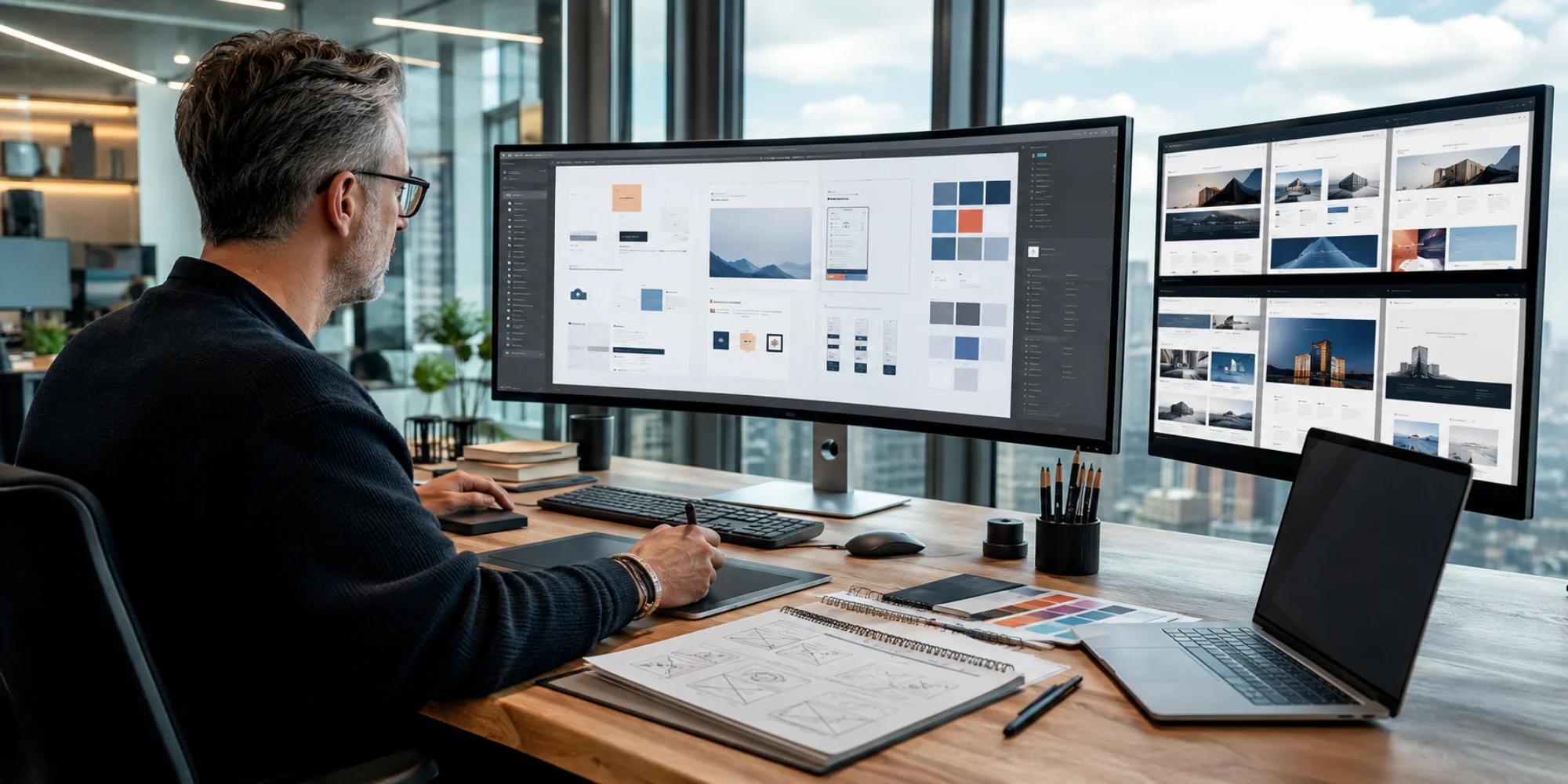
A Custom Web Design System is far beyond a set of design assets. It is a hierarchical system that consists of elements of visual components that can be reused, interface conventions, typography, color rules, rules of spacing, interaction conventions, and accessibility rules that ensure consistency on all the pages.
Custom systems enable businesses to:
- Create a distinctive and familiar image.
- Have brand consistency at all customer touchpoints.
- Enhance user experience in the websites with standardized interactions.
- Promote the growth of the web site without redesigning all the pages.
- Establish a more emotional attachment with visitors.
As an example, a healthcare provider needs a design system that would give them trust with its soothing colors, simple navigation, and easy-to-find information. An IT company, in turn, can afford to be more innovative and bold with visuals, interactive, and contemporary UI patterns. Individualization makes sure that each business tells their own story, and not uses a canned look.
Core Elements of a Custom Web Design System
Brand-Focused Visual Components
Any effective design of a Brand identity starts with well thought-out graphics. These consist of typography, color schemes, icons, images, spacing, and graphic designs that help to solidify the brand.
Instead of using any colors or fonts created by AI randomly, custom systems set definite design standards. All visual aspects collaborate to form a professional, memorable experience that customers instantly identify in between websites, landing pages, and online campaigns.
Reusable UI Components
Design systems structure reusable interface elements which enhance consistency and efficiency of development. These include:
- Buttons
- Navigation menus
- Contact forms
- Cards
- Testimonials
- Pricing tables
- Hero sections
- Image galleries
- Call-to-action blocks
Rather than repopulating these elements per page, the designers create it once and use it repeatedly. This would save on maintenance expenses and also the visitors would be able to have the same interactions they are used to in the site.
Design Standards and Consistency
One of the largest benefits of Design systems is consistency. Each page is designed according to the set rules of design and this makes the site easier to use, and maintain.
Unified spacing, typography, mobile-friendliness, accessibility guidelines, and user behaviors generate a smooth experience among desktops, tablets, and smartphones. With the expansion of a business, it is possible to add new pages and features and not to interfere with the overall design language.
How Custom Design Systems Create a Competitive Advantage
Companies that have robust design systems design memorable online experiences that stand out among their competitors who only make use of AI-generated designs.
An effective system enhances usability by enabling users to find information, perform functions and move about the site without the need to struggle to find any information. Improved usability can result in higher engagement, increased session lengths, and conversion rates.
Custom systems are also helpful in the implementation of SEO because they help in supporting:
- Faster loading pages
- Logical heading structures
- Clean HTML architecture
- Responsive web design
- Better Core Web Vitals.
- Better accessibility
- Enhanced mobile performance
Also, scalable design systems lower both the development cost in the long term since updates can be made on several pages at the same time.
Businesses looking to build a distinctive online presence often benefit from professional custom web design services that focus on creating unique design systems instead of relying on generic AI-generated layouts.
Common Mistakes That Lead to Generic Website Designs
Most companies tend to build unmemorable websites out of ignorance, as they focus more on speed instead of being strategic when it comes to branding.
Overusing AI-Generated Templates
Templates are quick and easy to develop but tend to give almost the same layout that does not help convey brand personality.
Ignoring Brand Guidelines
Lack of typography, color systems, image, and messaging guidelines make websites more untrustworthy and inconsistent in appearance.
Prioritizing Speed Over User Experience
Rushing to launch must not be at the cost of user-friendly navigation, accessibility or responsiveness. Lack of user experience in a site can lead to increased bouncing and reduced conversions.
Failing to Customize Design Elements
A change in logos and colors and keeping the rest of the elements the same leads to superficial branding. Authentic Custom site design means careful customization of all the elements of the user interface.
Future-Proofing Your Website Beyond AI Templates
Technology is rapidly developing, and AI will surely become more and more significant in the development of websites. Nonetheless, companies must see AI as a productivity enhancement tool, as opposed to strategic design thinking.
Future friendly websites are constructed with flexible systems that can be updated based on new technologies, new content formats and new user demands without necessarily having to be completely redesigned.
The scalable design system will make it easier to increase the rate of improvement since the designers and developers will be able to add new components without violating the visual consistency. With ongoing growth in search engines regarding the consideration of user experience, accessibility, and content quality, business firms with orderly designed systems are bound to be in better positions to succeed in the long term.
The best digital strategies will be an integration of AI effectiveness and human creativity. Robots help to speed up the repetitive work, and the work of talented designers will help to adjust each interaction to the business objectives, customer needs, and brand perception.
Conclusion
As AI continues reshaping digital experiences, businesses must avoid blending into a growing sea of nearly identical websites. By making an investment in Custom Web Design Systems, organizations are able to design unique branding, user experiences, enhance their SEO functionality, and scalability of digital platforms that expand with their business. By focusing on strategic design systems that are uniquely identified and offer sustainable value to customers, companies should avoid only using automated templates.
We think that technology can be used to improve creativity at Fine Digital Marketing Agency, but not eliminate it. To make businesses not another victim of AI-driven brand sameness, our team creates conversion-centered, responsive, and future-oriented websites that are innovative in design and apply time-tested UX principles. When you are willing to create a web site that reflects your brand and would help you grow in the long run, investing in a custom design system is one of the wisest choices you could make.